

Lab Grown Diamond Buying Guide
Buying a diamond should feel exciting, not overwhelming. Whether you're shopping for an engagement ring or adding to a fine jewelry collection, lab grown diamonds offer the same beauty, durability and sparkle as their mined counterparts, usually at a more accessible price. Consider this your complete guide to buying a lab grown diamond, covering everything from how these stones are made to the questions worth asking before you buy.
Are lab grown diamonds real? Yes. They're grown in controlled laboratory environments, and they share the same chemical composition, crystal structure and optical properties as natural diamonds. The only real difference is origin.
Quick Start: How to Buy a Lab Grown Diamond Today
What Are Lab Grown Diamonds and How Are They Made?
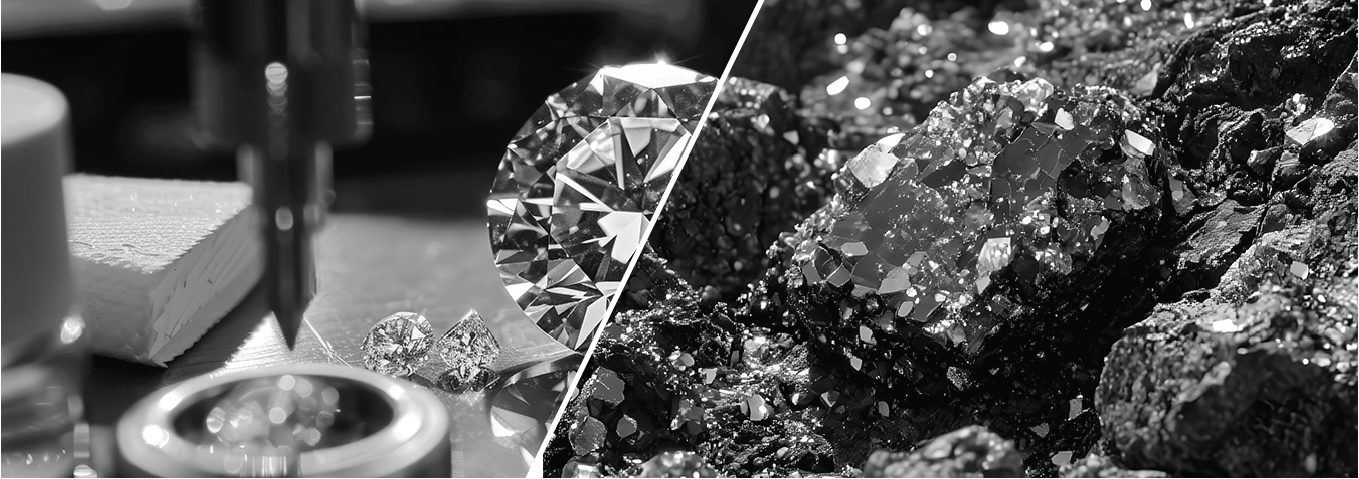
Lab created diamonds are grown in controlled environments rather than mined from the earth, but they share the same crystalline structure, the same 10 on the Mohs hardness scale, and the same brilliance as natural stones, since both are pure carbon in the same cubic lattice. That's what separates a real diamond, grown or mined, from simulants like cubic zirconia or moissanite, which look similar but have a different chemical makeup entirely.
A lab grown diamond starts as a tiny carbon seed, grown using one of two methods. Chemical Vapor Deposition (CVD) places a seed in a vacuum chamber, where a carbon rich gas is activated by microwave plasma energy and builds up layer by layer at high, controlled temperatures. It's the more common method today, and the foundation of Maitri's cultivation process. High Pressure High Temperature (HPHT) replicates conditions deep within the earth, using intense pressure and heat to dissolve carbon and crystallize it onto a seed, and is most often used for fancy colored stones. Both methods produce genuine diamonds that pass every gemological test used on mined stones. See What Are Lab-Grown Diamonds? Everything You Need to Know for more on the technology.
Lab Grown vs Natural Diamonds: Key Differences and Similarities
The material is identical. The origin is what changes. Both share the same chemical composition, the same 4C grading standards, and the same suitability for everyday wear, and even experienced jewelers usually can't tell them apart without specialized equipment.
| Factor | Lab Grown Diamonds | Natural Diamonds |
|---|---|---|
| Origin | Created in controlled laboratory environments | Formed naturally underground over long geological time |
| Typical Price | Generally lower for comparable quality | Typically higher, reflecting rarity and mining costs |
| Traceability | Can usually be traced from creation to finished piece | Supply chains vary widely in transparency |
| Resale Value | Generally does not hold resale or investment value | Tends to hold value somewhat better over time |
| Environmental Impact | No mining required, reducing land disturbance | Involves large scale extraction and ecological disruption |
Lab grown production can scale in ways mining never can, which is why these diamonds typically carry a meaningfully lower price for comparable size and quality. See Lab-Grown Diamonds vs Natural Diamonds for the full comparison, and CVD vs HPHT Diamonds for how each growth method affects the finished stone.
Understanding the 4Cs for Lab Created Diamonds
Cut: The Most Important C for Sparkle
Carat Weight and Diamond Size: Finding the Right Balance
Color and Clarity: How Clean and White Should Your Lab Diamond Be?
Choosing a Shape and Style for Your Lab Grown Engagement Ring
Certification, Grading Labs, and Traceability
Price, Value, and Resale: Are Lab Grown Diamonds Worth It?
Ethical, Environmental, and Sourcing Considerations
Questions to Ask and Mistakes to Avoid Before You Buy
Frequently Asked Questions
Quick Buying Recommendations
If you only prioritize one factor, make it cut. A diamond's appearance depends more on cut quality than on small differences in color or clarity, which makes it the most consequential decision you'll make. For a center stone, aim for Excellent or Ideal, even if that means accepting a slightly smaller carat weight or one lower color grade. The difference in light performance is visible immediately.
Cut grade and shape are often confused. Cut grade refers to proportions, alignment, polish and symmetry, and determines how a stone returns light. Shape is simply the geometric form, round, oval, cushion or princess, and has nothing to do with cut quality on its own. Well cut lab grown diamonds are planned and polished to maximize light performance rather than simply preserving carat weight, which is why cut deserves more attention than most buyers give it. See our Diamond Cut Guide for more on reading a cut grade correctly.
Carat weight measures mass, not the size you'll see on your hand. Two diamonds of identical weight can look different depending on shape and cut: elongated shapes like oval and pear tend to appear larger face up, while a deep cut can hide weight beneath the surface.
Many buyers gravitate toward a moderate carat range that balances presence with everyday practicality, though budget and taste should guide the final decision. Because a lab grown diamond costs meaningfully less than a comparable natural one, buyers often put those savings toward size instead.
• Maximum presence: prioritize carat weight, and accept a slightly warmer color grade with clarity that's still eye clean
• Everyday durability: choose a sturdy shape and setting built for daily wear
• Tight budget: choose a slightly smaller stone with an excellent cut, since cut delivers more perceived beauty per dollar than size does
Our Diamond Carat Guide breaks down size and budget combinations further.
Advances in both growth methods have made higher color and clarity grades far more consistently available than they once were. HPHT growth frequently yields colorless results, and CVD technology has improved enough that colorless to near colorless stones are increasingly common too.
D to F grades are colorless and suit platinum or white gold. G to H grades are near colorless and represent the strongest value, since the difference from colorless is nearly impossible to detect without a side by side comparison. I to J grades may show a warm tint that can actually work well in yellow or rose gold.
The real clarity goal isn't perfection, it's "eye clean," meaning no visible flaws without magnification. VS1 to VS2 is a common sweet spot, and a well chosen SI1 can look just as clean for less money, since minor inclusions rarely affect beauty at normal viewing distance. Our Diamond Color Guide and Diamond Clarity Guide include photo references for comparing grades side by side.
Shape and setting define a ring's personality more than any other decision. Round diamonds deliver maximum brilliance through precisely calibrated facet geometry. Oval and pear shapes are elongated and tend to look larger for their weight. Cushion cuts combine soft, rounded corners with strong fire. Emerald and Asscher cuts use a step cut structure that shows off clarity through broad, mirror like flashes, so they pair best with higher clarity stones. Princess cuts offer sharp corners and strong sparkle at a lower per carat price than round.
Match your setting, solitaire, halo, three stone or pavé, to the wearer's lifestyle, since active hands tend to do better with a bezel or lower profile setting that protects the stone from daily bumps.
Any certified diamond of meaningful size should come with an independent grading report from a recognized laboratory such as IGI, GIA or GCAL. The report states clearly whether a diamond is lab grown or natural, and otherwise uses identical 4C terminology. Before finalizing a purchase:
• Confirm the report matches the physical stone: shape, measurements, carat weight and inscription number
• Verify the report clearly states "laboratory grown" or equivalent wording
• Check cut, color, clarity and carat weight against what the report claims
• Ask whether the diamond has undergone post growth treatment, since enhancements must be disclosed
• Ask about sustainability certifications, such as SCS 007, or third party carbon neutrality verification
Maitri's focus on complete traceability means buyers know exactly where and how their diamond was cultivated, with chain of custody documentation from reactor to finished piece. See our Diamond Certification Explained guide for a closer look at how grading works.
Lab grown diamonds generally cost significantly less than natural diamonds of comparable quality, because production can scale in ways mining cannot. The real value is what it delivers right now: a larger stone, strong aesthetics, and the same meaning a diamond has always carried in fine jewelry. Where transparency matters is resale. Lab grown diamonds generally don't hold resale or investment value, and natural diamonds tend to hold up somewhat better, which is true of most fine jewelry bought for personal reasons rather than as an investment.
To judge whether a price is fair, compare stones with identical 4Cs across a few reputable sellers, check per carat pricing for consistency, and look at total cost, including the setting, rather than the stone price alone.
Traditional diamond mining involves land disturbance, water pollution, carbon emissions, and supply chains that vary widely in transparency. Lab grown diamonds remove the need for large scale extraction and are easier to trace. Still, not every producer backs up its sustainability claims with real data, so it's worth asking a few questions before taking "ethical" or "sustainable" at face value:
• What energy source powers the growth reactors, and is it renewable?
• Is the carbon footprint per carat disclosed, and are any offsets credible?
• Does the supplier hold third party sustainability certifications, such as SCS 007?
• How transparent is the chain of custody from growth to final sale?
Maitri operates as a climate neutral producer, with sustainability ratings grounded in third party verification. We'd rather you ask these questions of any supplier than accept vague claims, including from us.
Before you commit to a stone, run through this checklist:
• Is the diamond CVD or HPHT grown, and has it undergone any post growth treatment?
• Does it come with an independent grading report, and does the report number match the girdle inscription?
• What are the return, exchange and upgrade policies?
• Can the supplier document the diamond's origin and sustainability credentials?
Common mistakes include chasing carat weight while ignoring cut quality, buying uncertified or vaguely documented stones, and paying a premium for extremely rare clarity grades, like IF or FL, when an eye clean VS grade looks identical to the naked eye. Some buyers also assume every stone is produced sustainably without verifying the claim, or focus so much on the diamond that they overlook the setting's craftsmanship.
Are lab grown diamonds real?
Yes. They share the same chemical composition, crystal structure and hardness as natural diamonds, grown in a controlled environment instead of underground.
Are lab grown diamonds certified?
Yes. Labs such as IGI and GIA grade them on the same 4C scales used for natural stones, with the report stating the diamond's origin.
Do lab grown diamonds sparkle like natural diamonds?
Yes. Sparkle depends on cut quality and optical properties, both identical between the two, so a well cut lab grown diamond sparkles just as much.
Can jewelers tell the difference?
Not reliably by eye. Telling them apart requires specialized equipment, which is why certification matters so much.
Are lab grown diamonds good for engagement rings?
Yes. They offer the same durability and brilliance as natural diamonds, and the savings often let buyers choose a larger stone or higher grade.
How long do lab grown diamonds last?
Indefinitely, under normal wear. They're just as hard and durable as natural diamonds and won't fade or degrade over time.
Are lab grown diamonds worth buying?
For most buyers, yes, especially if beauty, ethics and value matter more than resale potential.
Which certification should I choose?
Look for a report from an established lab such as IGI, GIA or GCAL, all of which use rigorous, consistent grading standards.
Different priorities call for different approaches:
If sparkle is your priority, focus on cut quality above everything else, checking proportions, polish and symmetry rather than chasing a bigger carat number.
If size is your priority, consider shapes that read larger for their weight, and relax color or clarity slightly, since size differences are easier to notice than subtle grade differences.
If value is your priority, look for the point where quality stops being visually distinguishable from the grade above it, rather than paying for a grade you won't actually see.
If premium quality is your priority, choose the strongest available combination of cut, color and clarity, and expect to pay more, since an exceptional grade across every category is inherently rarer, even among lab grown stones.
Buying a lab grown diamond doesn't need to be complicated if you keep a few principles in mind. Prioritize cut above all else, since it has the biggest impact on how a diamond looks. Balance color, clarity and carat weight according to what matters most to you, not what a sales floor pushes you toward. Buy only certified diamonds, and confirm the report matches the stone in your hand. Choose a supplier that's transparent about origin, treatment and sourcing.
Maitri Lab Grown Diamonds follows exactly this standard, growing traceable, certified stones and helping buyers compare options for engagement rings or explore wholesale lab grown diamonds. Wherever you decide to buy, apply the same standard, and you'll end up with a diamond you can feel entirely confident about.