

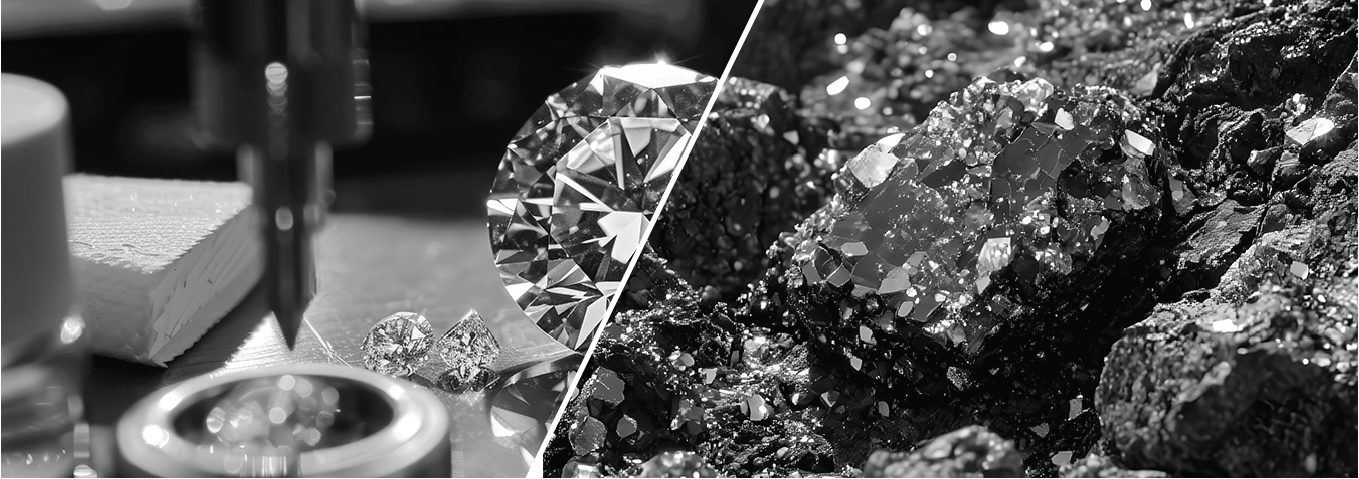
Lab Grown Diamonds and the New Generation of Diamond Buyers
For most of the last century, buying a diamond followed a familiar script. A couple visited a jeweler, learned the 4Cs, chose the largest natural stone the budget allowed, and rarely asked where it came from. That script is being rewritten. Younger buyers approach diamonds with different questions, different priorities, and a far greater willingness to challenge tradition, and lab grown diamonds sit at the center of that shift.
This article explains what lab grown diamonds are, why they appeal so strongly to younger generations, how they compare with mined diamonds, and what any buyer should understand before choosing one.
What Are Lab Grown Diamonds?
Are Lab Grown Diamonds Fake?
This remains the most common misconception. A fake diamond is a simulant, such as cubic zirconia or moissanite, which only imitates a diamond's appearance while having a different chemical composition. Lab created diamonds are not simulants. They are diamonds in every scientific sense, and they are graded by independent laboratories such as IGI and GIA using the same cut, color, clarity, and carat standards applied to natural diamonds.
Why Younger Buyers Are Choosing Lab Grown Diamonds
Millennials and Gen Z did not grow up with the same assumptions about diamonds as their parents. They research extensively, compare options online, read reviews, and expect brands to be open about how products are made. Several factors have made lab grown diamonds a natural fit for this mindset.
Better Value Without Compromise
Price is often the first thing that draws attention. Because lab diamonds do not depend on the cost and scarcity of mining, they typically cost considerably less than a natural diamond of the same size and quality. Many buyers find they can pay roughly half, or sometimes less, for a comparable stone.
That difference changes the entire buying decision. Instead of accepting a smaller stone or lower grades to stay within budget, a buyer can choose larger diamonds, a higher color grade, or a better cut. Some put the savings toward a platinum or gold setting they truly love, a wedding, a home, or simply keep the money. For a generation that tends to think carefully about financial priorities, that flexibility matters.
Transparency and Traceability
Younger consumers want to know the story behind what they buy. With mined diamonds, the journey from mine to store can pass through many hands, and tracing a specific stone's full origin is not always straightforward.
Lab grown diamonds offer a simpler chain. Each stone is produced in a known facility, and reputable manufacturers can document where and how it was grown. Many certified stones carry a laser inscription on the girdle that matches the grading report, giving buyers confidence that the diamond they receive is the diamond described.
Ethical Sourcing and Social Responsibility
Concerns about conflict diamonds shaped public perception of the diamond industry for years. The Kimberley Process was created to stop the trade in diamonds that finance armed conflict, and it has made a significant difference, yet critics argue its definitions are narrow and do not address wider issues such as labor conditions or community impact.
Lab grown diamonds sidestep these questions entirely because no mining is involved. For buyers who view social responsibility as part of a purchase decision, choosing lab grown diamonds offers clear peace of mind about ethical sourcing.
A Considered Approach to Sustainability
Sustainability is an important value for many younger generations, and lab grown diamonds are frequently described as a sustainable alternative. They avoid the land disturbance, excavation, and ecological disruption associated with large-scale mining.
Honesty matters here, though. Growing diamonds requires substantial energy, so the carbon footprint of any individual stone depends heavily on how that energy is generated. A facility powered largely by renewable sources has a very different profile from one relying on fossil fuels. Thoughtful buyers should ask manufacturers about their energy use rather than accepting broad environmental claims at face value. A responsible producer will answer that question openly.
Lab Grown vs Mined Diamonds: A Side-by-Side Comparison
The table below summarizes the practical differences buyers most often ask about.
| Factor | Lab Grown Diamonds | Mined Diamonds |
|---|---|---|
| Chemical composition | Pure carbon | Pure carbon |
| Hardness | 10 on the Mohs scale | 10 on the Mohs scale |
| Appearance | Identical brilliance and fire | Identical brilliance and fire |
| Origin | Grown in a controlled facility | Formed naturally, extracted through mining |
| Price for the same size and quality | Significantly lower | Higher, driven by rarity |
| Traceability | Straightforward | Varies by supply chain |
| Grading | IGI, GIA, and other labs | IGI, GIA, and other labs |
| Resale value | Limited | Retains more value, though usually below retail |
| Rarity | Not rare | Geologically rare |
The comparison makes one thing clear: the choice is not about quality or beauty. It comes down to what each buyer values most, whether that is geological rarity and tradition, or value, transparency, and flexibility.
How Lab Grown Diamonds Are Reshaping the Engagement Ring Market
Beyond the Engagement Ring: Everyday Diamond Jewelry
The Lab Grown Diamond Business and the Future of the Market
What to Know Before Choosing Lab Grown Diamonds
Frequently Asked Questions
Conclusion
The appeal of lab grown diamonds extends well past engagement rings. Because they make high-quality stones more accessible, they have opened the door to diamond jewelry that many people once considered out of reach.
Popular choices include:
• Stud earrings, where matched pairs of well-cut stones become far more attainable
• Solitaire pendants, a classic piece that suits both everyday wear and gifting
• Tennis bracelets, which require many carefully matched diamonds
• Anniversary and eternity bands, where consistency across numerous stones is essential
This change is significant for the wider jewelry industry. Diamonds are increasingly bought for birthdays, milestones, or simply for personal enjoyment rather than being reserved for once-in-a-lifetime occasions. Interestingly, the growth has also affected demand for smaller mined diamonds, since buyers who once chose small natural stones for accent or fashion pieces often now opt for lab grown alternatives.
The lab grown diamond market has matured quickly. Growing technology has improved, allowing manufacturers to produce larger diamonds with higher clarity and better color more consistently than in earlier years. Grading laboratories now treat lab grown diamonds as a standard part of their work, and major retailers stock them alongside traditional collections.
As production has become more efficient, prices have become more accessible, which has broadened demand further. For retailers and jewelry designers, this has created new opportunities in sourcing and inventory. Businesses looking for consistent supply often explore trade relationships, and our guide to wholesale lab grown diamonds explains how that process works for the trade.
The future likely holds room for both categories. Natural diamonds will continue to appeal to those who value geological rarity and heritage. Lab grown diamonds will continue to serve buyers who value quality, transparency, and value. Rather than replacing one another, the two are settling into distinct roles within the wider diamond market.
Smart buying habits apply regardless of origin. Before you buy, keep these points in mind.
Always ask for independent certification. A grading report from a recognized laboratory such as IGI or GIA confirms that the stone is lab grown and documents its quality. If you are browsing loose lab grown diamonds, the report should accompany every stone.
Prioritize cut quality. Cut has the greatest influence on how a diamond sparkles. A well-cut diamond with a slightly lower color grade will often look more beautiful than a poorly cut stone with a perfect grade.
Understand resale expectations. Lab grown diamonds should be bought for enjoyment and meaning, not as a financial investment. Their resale value is limited, and buyers should go in with clear expectations.
Ask about the manufacturer. Where was the stone grown? How was it produced? Were any post-growth treatments applied? A trustworthy supplier will answer these questions clearly.
Buy loose stones when possible. Selecting a loose diamond before choosing a setting lets you see the stone's quality directly and compare certificates side by side.
Are lab grown diamonds real diamonds?
Yes. They share the same chemical composition, crystal structure, and physical properties as mined diamonds. The only difference is their origin.
Can a jeweler tell the difference between lab grown and natural diamonds?
Not by eye. Identifying origin requires specialized testing equipment used by gemological laboratories and some well-equipped jewelers.
Do lab grown diamonds last as long as natural diamonds?
Yes. They have the same hardness and durability, so they are equally suited to everyday wear in an engagement ring or any other fine jewelry.
Why do lab grown diamonds cost less?
Their price reflects production cost rather than geological rarity. Growing a diamond avoids the expense of exploration, mining, and long supply chains.
Are lab grown diamonds better for the environment?
They avoid the land disruption of mining, but they require significant energy to produce. Their overall impact depends largely on the energy sources a manufacturer uses.
The new generation of diamond buyers is not rejecting diamonds. It is redefining what makes a diamond meaningful. Younger buyers value transparency, ethical sourcing, thoughtful spending, and personal expression, and lab grown diamonds meet those expectations without sacrificing beauty or quality.
A lab grown diamond is a real diamond with a clear origin, offering better value and the freedom to choose the size, shape, and design that genuinely suits you. Whether you are selecting an engagement ring, a pair of stud earrings, or your first loose stone, the most important step is the same: buy from a transparent source, insist on independent certification, and choose the diamond that matches your values.