

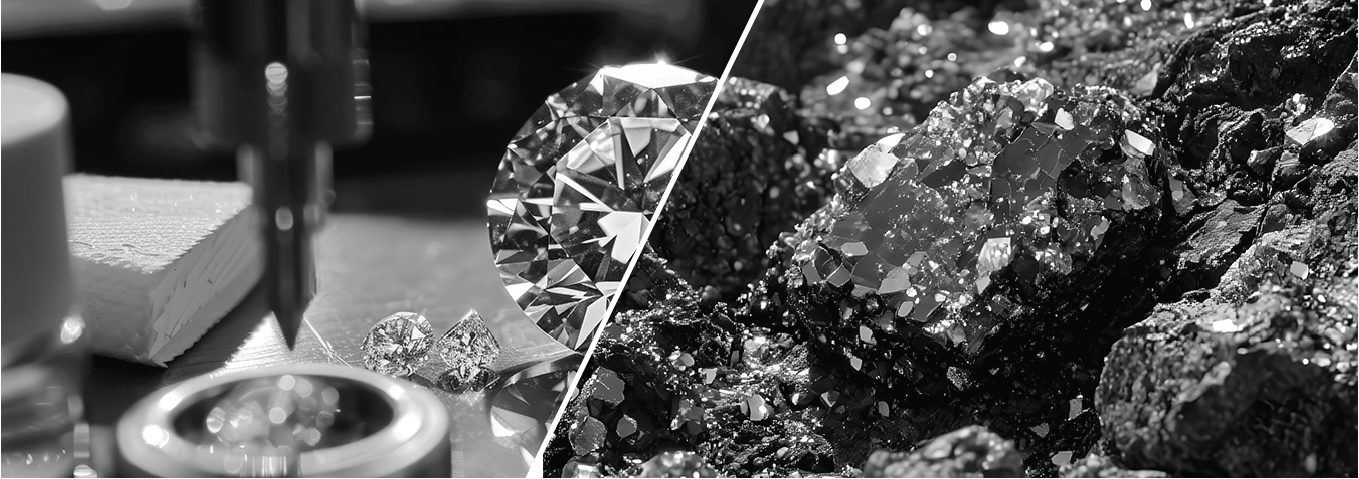
How Lab-Grown Diamonds Are Disrupting the Traditional Diamond Industry
For generations, the diamond industry ran on a single premise: diamonds are rare, and rarity is what gives them value. That old saying, a diamond is forever, was never just about durability. It was about scarcity, about the idea that pulling a stone from the earth's crust was difficult, expensive, and limited by nature itself. The entire mined diamond industry, from rough diamonds to the polished stone in an engagement ring, was built around that story.
That story is changing. Lab grown diamonds have moved from a niche curiosity to a legitimate force reshaping the global jewelry market, and the disruption is not theoretical. It is happening in showrooms, on wedding registries, and inside the boardrooms of mining companies that once assumed their grip on the natural diamond industry was unshakeable. This article looks at how that shift happened, what it means for buyers, and where the diamond market is likely headed next.
What Lab-Grown Diamonds Actually Are
A Market Built on Scarcity Meets a New Reality
Why Consumer Demand Is Shifting
To understand why lab grown diamonds are disrupting the industry so significantly, it helps to understand how the traditional diamond market maintained its structure for so long.
For most of the twentieth century, De Beers controlled a large share of the global supply of rough diamonds. That control allowed the company to manage output carefully, ensuring that diamonds remained scarce enough to command premium prices. Marketing campaigns reinforced diamonds as a status symbol, tying them to milestones like engagement rings and anniversaries. The strategy worked. Diamonds became embedded in cultural expectations around love and commitment, and the mining companies behind that supply chain built enormous value on the back of that association.
But scarcity as a business model has a vulnerability: it depends on there being no alternative source. Once diamond growing technology matured to the point where lab grown stones became visually and physically indistinguishable from mined ones, the foundation of that scarcity narrative started to shift. Suddenly, there was a second source of real diamonds, one not bound by geological luck or the limitations of diamond mining.
This is the inflection point the industry now finds itself at. Natural diamonds continue to hold cultural and market significance, particularly for buyers who value the geological story or investment history tied to older stones. But the assumption that a diamond must be mined to be genuine no longer holds the same weight it once did.
Several forces are driving consumer demand toward lab grown stones, and none of them are temporary trends.
Ethical sourcing has become a genuine priority. The mined diamond industry carries a difficult history, one that includes conflict diamonds and documented human rights abuses tied to certain mining regions. The Kimberley Process was introduced to address some of these concerns by certifying diamonds as conflict free, but it has well-known limitations, including gaps in what it actually tracks and enforces. Lab grown diamonds sidestep this issue entirely. There is no mining, no displacement, no ambiguity about where the stone came from. For buyers who want certainty rather than a certification with known blind spots, that matters.
Younger consumers think differently about value. Millennial and Gen Z buyers, now a significant share of the engagement ring market, tend to prioritize transparency and traceability over inherited notions of prestige. A status symbol rooted in scarcity means less to a generation that has grown up questioning supply chains across every industry, from clothing to food to electronics. Diamonds are no exception.
Price accessibility has expanded who can participate in the jewelry market. Lab grown prices sit meaningfully below equivalent mined stones, and that gap has done something the industry has never seen before: it has allowed more people, particularly in the middle class, to buy larger, higher quality stones than they could have afforded from the mined diamond industry. A buyer who once had to choose a smaller or lower clarity mined diamond can now consider a larger, better cut lab grown stone at a similar budget. That shift alone has expanded the entire jewelry market rather than simply redistributing existing demand.
Comparing Lab-Grown and Mined Diamonds
| Factor | Lab Grown Diamonds | Mined Diamonds |
|---|---|---|
| Composition | Identical carbon crystal structure | Identical carbon crystal structure |
| Appearance to the naked eye | Indistinguishable from mined stones | Indistinguishable from lab grown stones |
| Origin | Grown in a controlled lab using HPHT or CVD | Extracted through diamond mining |
| Supply | Not limited by geology, can scale with demand | Limited by finite natural deposits |
| Price | Generally lower for comparable carat, cut, and clarity | Generally higher due to scarcity and extraction costs |
| Ethical traceability | Fully traceable production process | Varies; Kimberley Process certification has limitations |
| Long-term value retention | Still developing as a resale market | Established resale and investment market, though value varies |
| Certification | Graded by labs such as IGI and GIA | Graded by labs such as IGI and GIA |
This table reflects genuine trade-offs rather than a case for one option over the other. Both are real diamonds. The right choice depends on what a buyer values most, whether that is budget, ethical certainty, or a preference for a stone with a natural geological origin.
How This Is Affecting Mining Companies and the Natural Diamond Market
What This Means for Buyers
The Road Ahead for the Diamond Industry
Frequently Asked Questions
Final Thoughts
For anyone shopping for diamond jewelry today, this shift creates both opportunity and a need for better information.
Certification matters more than ever. Whether a diamond is lab grown or mined, buyers should look for grading from a recognized laboratory. Igi certified lab grown diamonds have become something of a standard in this space, offering consistent grading criteria for cut, color, clarity, and carat weight, the same fundamentals that have always determined diamond quality. A certificate protects the buyer and confirms exactly what they are purchasing.
Retailers and jewelers are adapting their sourcing. Businesses looking to serve this growing segment of demand are increasingly sourcing wholesale lab grown diamonds directly from manufacturers, allowing them to offer competitive pricing without sacrificing quality or certification standards. This is true across markets, from operations sourcing wholesale lab grown diamonds in the United States to those doing the same in the United Kingdom, where demand has grown alongside the broader European jewelry market.
Buyers comparing loose stones should understand cut quality drives value more than origin. Someone shopping for loose lab grown diamonds to set into a custom ring should prioritize cut grade first. A well cut lab grown diamond will outperform a poorly cut mined diamond in brilliance and fire, regardless of which one carries the higher price tag on paper. This is a common mistake buyers make: assuming origin alone determines quality, when cut, clarity, and color remain the true determinants of how a diamond looks and performs.
Common misconceptions still need addressing. Beyond the cubic zirconia confusion mentioned earlier, some buyers worry that lab grown diamonds will not hold value the way mined diamonds have historically. It is true that the resale market for lab grown stones is still maturing, and buyers purchasing primarily as an investment should factor that into their decision. For those buying for personal enjoyment, an engagement ring, or a milestone gift, this concern matters far less than getting genuine value, certified quality, and a stone that will be worn and loved for decades.
The diamond industry is not collapsing. It is permanently changing, and that distinction matters. Diamond mining will continue, natural diamonds will retain a devoted following, and the auction houses selling rare natural stones will keep doing so for buyers who want exactly that. What has changed is the assumption that mined diamonds are the only legitimate option.
Lab grown stones have earned their place by meeting the same standards mined diamonds are graded against, using the same certification bodies, the same 4Cs, and the same scientific criteria. The disruption did not come from marketing. It came from technology maturing to the point where the product itself could no longer be dismissed.
Looking forward, expect continued growth in lab grown production, further improvements in growing technology that reduce production time, and a jewelry industry that increasingly treats lab grown and mined diamonds as two legitimate categories rather than a genuine stone versus an imitation. The global jewelry market is not shrinking because of this shift. It is expanding, pulling in buyers who previously felt priced out of diamond jewelry altogether.
Are lab grown diamonds real diamonds?
Yes. Lab grown diamonds share the same chemical composition, crystal structure, and physical properties as mined diamonds. The difference is where and how they formed, not what they are made of.
Can jewelers tell the difference between lab grown and mined diamonds just by looking?
No. The visual differences are undetectable to the naked eye. Distinguishing between the two requires specialized equipment designed to detect specific growth characteristics, and this is typically done in a certified gemological lab.
Why are lab grown diamond prices lower than mined diamonds?
Lab grown prices reflect a more efficient, scalable production process compared to the extensive costs of diamond mining, including exploration, extraction, and the finite nature of natural supply.
Will lab grown diamonds hold their value over time?
The resale market for lab grown diamonds is still developing compared to the long-established resale market for mined diamonds. Buyers focused primarily on investment value should research this carefully, while those buying for personal wear typically prioritize quality and certification over resale potential.
Are lab grown diamonds considered ethical?
Lab grown diamonds avoid the mining process entirely, which removes concerns tied to conflict diamonds and the human rights abuses historically associated with certain mining regions. Many buyers view this traceability as a meaningful ethical advantage.
The rise of lab grown diamonds represents one of the most significant shifts the diamond industry has experienced in decades. It has not erased the appeal of natural diamonds, but it has ended their monopoly on legitimacy. Buyers now have a genuine choice, backed by real certification, real science, and real value, and that choice is exactly what is reshaping the future of diamond jewelry.